Friday, March 17, 2017

Circle of Hurt Launch Party


FOR IMMEDIATE RELEASE


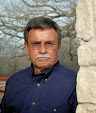
Jim H. Ainsworth and Season of Harvest Publications announce the publication of Jim’s eighth novel, Circle of Hurt.

They gather around a big table in the back of Prigmore’s General Store and Café in downtown Riverby several times a week most weeks. There are six of them, five men and one woman. There may have been more or less in the past. There are no programs or speakers. Those outside The Circle wonder what they talk about, but they don’t ask. The only requirement for membership is to have been deeply hurt or to have caused serious hurt to others.

Tee Jessup is not a member of The Circle, but he qualifies. He spends a lot of time on the porch of a dilapidated farm house on a hill, feeling sorry for himself over the loss of his parents, his brother and his wife. He dreams of taking revenge on the man responsible for his wife’s death, but he can’t take the vengeance he craves because he has a young son.  
  
Just down the hill from Tee’s rented house sits a long-abandoned shack. Decades earlier, it was used as a shelter for itinerant cotton pickers during harvest season. Clayton Dupree stayed in the picker shack when he was a boy. Now he has secretly returned to write his songs, paint his pictures, play his guitar, record everything that happens around him, and nurse a bullet wound. 

Ainsworth's second release, Believing in a Grand Thing, is partially in response to reader requests. He describes it as the story of a worn-out old cowboy’s attempts to blaze his trail to redemption.  He’s giving away a copy of this book with every purchase of Circle of Hurt. Additional copies may be purchased. 

Everyone is invited to a launch party for both books to be held Tuesday, March 28, from 5:00 to 8:00 p.m. at the A&M-Commerce Alumni Center, corner of Stonewall and Bois D’arc, Commerce, Texas 75428. All are welcome and reservations are not required. Refreshments will be served. 

All of Ainsworth’s other books will also be available at the party, from his website or at Amazon.com . Contact him at www.JimAinsworth.com or Jim@JimAinsworth.com

Wednesday, March 15, 2017

Fifty Years in a Thousand Miles--the Final Installment


Final Installment--Part 10—Oklahoma and home

Bob Messenger gave me instructions on the phone as I neared his home in Hollis. He is a long time friend from my post-college days in Tulsa. We worked for Pan American Petroleum as junior accountants. We soon learned we were both country boys and working in the downtown environment behind desks on the 7th floor of the Oil and Gas Building made us feel like fish out of water. We were friends from the get-go.

Back in those days, Bob had a ’46 Plymouth coupe with a 327 Corvette engine and he took me on many weekend trips to Oklahoma City and other locales. He was an upbeat, funny, friendly guy who loved to drive and loved to have fun, loved people, the perfect counterpart to my shyness. We clicked. But Bob got drafted and sent to Vietnam. I left my job shortly after and moved back to Texas.

I saw him briefly when he flew into Dallas after his discharge, but then there was no contact for close to forty years. But one day in about 2004, he and Sharon drove into my driveway. He had come to a book signing for my second novel. Charlotte and James Hilliard from Jasper were here for the signing and were also visiting our home. I was so astounded to see them all and so busy with arrangements for the signing that I still regret not having more time to visit and rehash old times. 

Bob and Sharon’s son Mark became a fan of my books and now owns them all. I had never met Mark, but I knew a lot about him and his impressive family. His son Jaco had just finished competing in the National High School Rodeo Championships in Cody, Wyoming. (I got to meet Mark this year when he and Bob came to my place after attending the Fort Worth Stock Show cattle auction.)

Bob and Sharon had remodeled her old family home in tiny Hollis and Bob waved me into the driveway. He looked about the same as he had ten years ago and a decade younger than I know he is, but said he was having a little trouble with feeling in his feet. 

They took me on a tour of the house and explained the changes they had made to the old home Sharon had grown up in. It was quite a contrast. Sharon told me that Bob had spent hours without success looking for a picture of him and me standing by that Ford coupe. 

I did not know that Bob had experienced some heart problems and had had two surgeries since I last saw him. Had to have part of his aorta removed and part of it went down into his leg, necessitating yet another surgery.
He had at least two strokes on the operating table and almost died. Medicine prescribed for high cholesterol had also had an adverse impact. The ordeal left him without some feeling in his hands and his feet.  And his brother died of heart failure while Bob was in the hospital.

But Bob was still Bob. Welcoming, cheerful, and optimistic.  Through it all, he maintained a sizable cattle and ranching operation. Sharon works in real estate and insurance.

We drove to downtown Hollis and the Boomerang Café for lunch with some of their friends. Hollis, like most small towns in this part of the country, is shrinking. Their church has shrunk from 600 members to less than 70. 
 
Then to Ken Bartlett’s home. Ken is a retired farmer nearing ninety. Bob said Ken had a reputation as a man who never got dirty and never let his equipment stay dirty for long. He had a cabin in his back yard filled with a very impressive collection of western saddles, tack and memorabilia. When I saw a picture of Richard Farnsworth on his wall, I told Ken about meeting Richard in Oklahoma City at the Cowboy Hall of Fame.

Bob loaned him his copy of my Biscuits Across the Brazos book. A few days later, Ken ordered all nine of my books. A few weeks after that, he called and left a message on my phone.  “Hello, Mr. Jim, this is Ken Bartlett in Hollis, Oklahoma. I want to tell you right now that I’ve never enjoyed books as much as I enjoyed yours. When you pick one up, you can’t put it down. They bring back old memories. You write the way things really were.”  I kept that recorded message.

We spent the afternoon telling stories of old times and new, then I reluctantly left before dark, thinking I might make it home and not have another night in a motel. I got into another big rainstorm just outside Hollis, but made it through. 

By the way, do you recognize that name, Bob Messenger? Remember Father Bob from Rails to a River?

As I traveled familiar territory toward home, I felt good about the trip. Had I really covered fifty years in a thousand miles in a trip that lasted less than three full days? You be the judge.

I tried to compose a few scenes from the memories as I headed toward home. Let’s see . . . a reclusive Oxford scholar with a menagerie of exotic animals; a farmer who built a successful flying service in the middle of nowhere—who flies famous people around the country—whose wife has been a world traveler who went to high school with one of my favorite cowboy actors who happens to have been born on the same day and the same year as me; a murder; a professional cowboy who managed one the largest ranches in the state for over two decades; another professional cowboy who writes novels endorsed by the great Elmer Kelton; a near death experience in one surgery, a miraculous healing from another.  Hmmm  . . . let me think. Are there some stories there or not? Check out Circle of Hurt. You might see one or two scenes that look familiar.

As I pulled into my driveway, the CD I had played intermittently on the road made its way back to Red River Valley and I had made my way back home. And I was still alive.  

Monday, March 13, 2017

Where Woodie Guthrie Learned to Play the Guitar


Part 9—of Fifty Years in a Thousand Miles--Pampa and More Old Friends

I was reluctant to leave Calvin, Linda and Dalhart, but the sun had set and I had set my sights on making Pampa before bedtime. As I reflected on our story-swapping while driving, I realized that Calvin saw me as the boy he knew, not the boy I thought I was. I saw Sidney as the boy I knew, not the boy he really was.

As I mentally wandered over the various phases and careers of my life, I figured that people who knew me during each of those careers and times saw me in a different way. I know I had trouble convincing folks that their CPA could also be their broker and financial planner. Later, I had the same problem convincing them I could be a novelist. 

I drove through Hartley, another old high school competitor, then Stinnett, where another of the stockbroker-CPAs I once worked with and trained, lived. Then Borger, where old friend and brother-in-law Jack Thornbrough grew up. 

Thunder and lightning roiled all around me as I traveled. I had the top-of-the-earth feeling one gets out there at high altitude. There are no mountains, but plenty of hills and valleys and the lighting displays are magnificent. I met a car about every thirty minutes, so I felt all alone. I seemed to be heading into the heart of the storm, but only got concerned once when heavy rain slowed me to about twenty.

They gave me room 137 (again) at a Best Western in Pampa and thunderstorms raged all night. The thunderclaps were the loudest I have ever heard and the wind blew so hard that water got under my door. 

The next morning, I asked for a telephone directory in the hotel lobby. The thirty-something clerk  asked, “What’s a telephone directory?” Really? I wondered if anybody would know in a few years.

Another clerk finally found one and I called Mike Ruff, another founding member of the 1st Global Registry (a specialized broker-dealer that I co-founded back in 1991).  Mike was still a practicing CPA, Certified Financial Planner and broker in Pampa. He and his wife Nancy, a Presbyterian minister, had been good friends to Jan and me.

I invited them to the motel, but they insisted I drop by their house. Over coffee, we kicked around old times, but mostly talked about where we were in the present. Nancy had undergone brain surgery to remove a debilitating tumor. She said that doctors gave her little chance of surviving the surgery, and even less of living a normal life if she did survive. Blindness was almost a certainty if she lived.

As he stood beside Nancy’s bed after surgery, Mike received a call from his doctor. He had been diagnosed with prostate cancer. Nancy survived her surgery and so did Mike. She still has her sight and shows little negative side effects from the debilitating illness. They were prayer warriors throughout and turned it over to God. They remain their old cheerful selves.

As we posed for photos, I got a text from a friend asking for financial advice, even though I have not been in the business for almost twenty years. I read the question to Mike and told him that this would be his life after retirement. We got a good laugh out of that. Old friends are good. We should keep in touch more. I left inspired and happy that I stopped for the visit. 

I left Pampa (the place where Woodie Guthrie learned to play the guitar) and headed toward Oklahoma.
I passed through Mobeetie, another famous western town with a jail that has been preserved. I wanted to stop, but had already told Bob and Sharon Messenger I would make Hollis, Oklahoma before noon. I also saw the sign that pointed toward Canadian, home of Mike Gardiner, another  1st Global rep that was a good friend. He is also in A River of Stories. Wished I had the time to stop and visit.

Saturday, March 11, 2017

The Old Hag Shows Up Again


Part 8—Fifty Years in a Thousand Miles--Dalhart.  What are the Odds? 

A short time later, Calvin did lose his job as manager of the Quien Sabe (Who Knows?) ranch. I heard that he had moved to Dalhart. He has little or no presence online since he left the ranch (not much before), but I had found enough information to chance finding him there.

Without benefit of a town map, I followed my instincts and almost immediately located a street named Peters and wondered if he had already had a street named for him. A few houses down, I stopped at the only address I found online, a small but nice brick house with a single garage in a residential neighborhood. A white pickup sat in the driveway. 

I knocked on the door and a man opened it. “Yes sir. What can I do for you?”

He was in the dark and covered his eyes as he looked out into the setting sun. When he did not recognize me, I thought it might not be him. He had put on a few pounds, aged a little. I counted off almost fifteen years since I had last seen him. “Looking for Calvin Peters. I’m Jimmy Ainsworth.”

“You found him. Well, I’ll be, it is you, ain’t it?”

It was about suppertime and I vowed not to interfere with that, so we sat on the porch. I had already dropped in on wife Linda unexpectedly for a meal on that last visit. Calvin, always a great story-teller, told me what had happened since leaving the Quien Sabe. 

He feels God led him north from the ranch rather than south and back to his old home turf around Adrian. He rented a small house and he and Linda began to rebuild their lives. He found a job driving a fuel truck. Kids and grandkids said he was driving a bomb down the highway, so he quit that and found a job at the XIT Feedlot (XIT Feeders). He worked inside for a while until he learned that riding the lots horseback paid better and suited better. 

When his boss learned he was looking for a house, he sold him his on Peters Street. Again, Calvin and Linda felt God’s guidance. They remodeled the place and “cowboyed” it up. Calvin told me they had already paid off the mortgage. This despite the fact that he was injured in a horse wreck that led to both head and back surgeries. Back at the feedlot, he decided to give up the horses and ride in an air-conditioned and heated tractor. Through it all, they maintained a positive attitude.

Calvin insisted on taking me inside and showing me their improvements and his displays of spurs, buckles and other awards he and his son and grandchildren have won in rodeos and roping events. In the kitchen, I took a step back when I saw Jay Dusard’s famous photograph of Julie Hagen entitled “North American Cowboy: a portrait”.  Julie Hagan was the top hand at Wagstaff Land and Cattle Co. in Wyoming when the shot was taken. I met her years later on a Wyoming mountain. 

From A River of Stories . . . Laughter filled the pre-dawn mountain air and lights came on in the cook tent. “The Old Hag” had finally arrived. At breakfast, we all knew Julie Hagen before we took our first bite. She was a ranch manager who had worked for ranches in Arizona, Colorado, Montana, and Wyoming. He was also a painter and poet. Her brother was an Olympic skier, her father a biologist, her mother a professional flutist. 

Calvin’s photo is signed by Jay Dusard. Jay came to the ranch to capture some of its majesty in photographs before the way of life disappeared. My photo was signed by Julie Hagen.

What are the chances that two guys who attended the same tiny school fifty years earlier in the Texas Panhandle would have the same photo of a woman (that I met once and Calvin never met; a woman from a state more than a thousand miles from Texas) hanging in their homes?

I had heard or read something about a civic award Calvin had won for community service, but he pretended not to know what I was talking about. Linda has taken a job with a local restaurant and arrived wearing her welcoming smile. 

Calvin and I swapped old stories for about an hour and a story about Sidney and the unusual lifestyle he chose came up. I said that compared to Sidney, I had been a wild and crazy guy in high school. 

Calvin put a hand on my shoulder and said, “Jimmy, you were a wild and crazy guy compared to me and most of our classmates.” That surprised me, because I had always seen myself as the shy introvert that I was inside—the new kid who tried to stay invisible. 

If you read Circle of Hurt, watch for remnants of this visit. 

Friday, March 10, 2017

A Bent Door and a Ranch


Fifty Years in a Thousand Miles—Part 7—The Bent Door and the Quien Sabe 

I headed toward Adrian, where I found the landscape around the tiny town littered by wind turbines. Sad to see. The town continues to shrink after I-40 replaced Route 66 and bypassed Adrian. Many of my old haunts were gone or empty, including the Bent Door. 

From Rivers Ebb. . . The Mother Road ran along the south side of the town. A hodgepodge of trading posts, service stations, garages, and restaurants gave Route 66 travelers a chance to fill up their cars and stomachs. Some had signs that said “Last Chance”. At the Bent Door, an arrow drawn on the window had two heads. One read Chicago, the other Los Angeles. 1,139 miles was printed in the center. 

And later, this . . .
His first plate of fried biscuits had been made better because he was sitting with Gabe and Nocona in a booth at the Bent Door. Three black Resistol hats, three pairs of black Justins. 

The Bent Door really does have a bent door and bent windows and it is still intact, though the business was long ago abandoned. I looked through the dusty windows and saw a few tables and chairs in various states of dilapidation, wondered if they were the same ones I sat in a half-century before.

And from A River of Stories . . . Looking at the booth where I sat so many times inspired me somehow. I wanted to take a few notes. I had left this country unwillingly, my cowboy dreams abandoned. Now, I had returned with dreams of becoming a writer. 

I stopped in front of the old Adrian Mercantile building, still standing but bearing little resemblance to the thriving general store I encountered as a boy. 

From Rivers Ebb—Mattie walked toward the general store. “JD or Bess told me it started as a hotel—rooms upstairs and a saloon downstairs.”
She turned up her nose at a dozen or more fresh hides, hair and blood showing, stacked on a wooden slab on the side porch. The place smelled of leather and oil-soaked wood mixed with horse and mule feed, wet tow-sacks, and salt blocks. Shelves were filled with a haphazard assortment of groceries and supplies. Horse liniment mingled with vanilla extract, potato chips and aspirin. Naked bulbs revealed harness and saddles stacked on stands. 

The Mid-Point Café was already closed for the day, so I walked into the gift and knickknack shop next door, asked the girl if she knew Sam Brown. She did, said he still lived here, but did not know where. Sam, another schoolmate at Adrian, is the author of a few Westerns that drew praise from the likes of Elmer Kelton (again, what are the odds?) I have read all his books and he’s been featured in at least one major magazine. An authentic cowboy who does daywork as well as writing. I drove by the house he had lived in on my last trip here, but it was abandoned, knocked on the door of the house where his parents lived. Nobody home. 

Adrian High School was just across the street. I walked over and looked in the windows. Little has changed about the building in fifty-plus years. I tried to be sixteen again as I sat in the place where my picture had been taken for the school annual, but could not. Awhile back, my son Damon sat on that same spot and had his picture taken when he went out of his way to pass through my old hometown. He knew a lot about it from reading my books.

I looked up at the sinking sun and decided I could make Dalhart before dark. I had heard that Calvin Peters, a classmate I wrote about twice in A River of Stories lived there now. I had seen Calvin twice in the years since high school. The first was at the Abilene Western Heritage Classic. 

From A River of Stories . . . I followed behind, taking my time to observe the boots with tall tops and slanted riding heels, the large spur rowels, and the huge palm-leaf hat, looking for the seventy-pounds-lighter boy I once knew. . . . I watched him and his Quien Sabe Ranch team compete that night. The younger cowboys obviously looked up to him. I left the next day, expecting I would never see him again. 

But I did see him again when I attended a writing conference in Amarillo a few years later. I dropped in unannounced at the Quien Sabe, where he had been ranch manager for at least twenty years. He invited me for supper and I spent the night. The next day, he loaned me a horse so that I could participate in a roundup. Memorable.

From A River of Stories: There was a screened-in overhang porch to my right where I saw a sea of black hats, all brim-up, crown-down on the floor beside four freezers that Calvin said were full of beef..
. . . Calvin stopped the pickup and rolled down a window. “This has been a good life, but the problem is I don’t own a single thing you see. Not that house, this pickup. I lose this job, I’ll be leaving here empty-handed after giving this ranch the better part of my life.”

My time on the Quien Sabe and Moorhouse Ranches inspired some of the locales in Rails to a River. He drove six miles on ranch property and stopped at a cattle guard that marked the entrance to Blind River Ranch headquarters. The road on the other side looked like it led nowhere, so seldom traveled it resembled a river wash rather than a road. 

And this . . .he feels like an interloper on ground that has given him birth and nourished his life for almost two decades, but the cold, dry, thin Texas Panhandle air recognizes him with a whistled greeting.

I am at a loss to explain why the ranch so inspired me. The railroad crossing one has to cross to reach the ranch is historical in its own way, and became the locale for a pivotal scene in Rails to a River which I won’t spoil here.