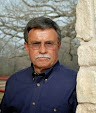
I can’t, of course, do justice to the life of this great man
today, not even if I had a week. There is not time to list all the titles and
offices he has held (usually president) and all the honors he has received from
at least twenty organizations (that I know of). He is Professor Emeritus of
Literature and Languages at Texas A&M-Commerce, a Gold Blazer and
Distinguished Alumnus, a Texas Piper Professor.
I have had the privilege of introducing Dr. Tarpley
on many prior occasions. As I returned to my files each time for his resume, I
always had to add a page for his most recent remarkable accomplishments.
Now, I have the honor of saying a final goodbye. His body may be lost to us, but his influence
will last longer than any of us, much longer.
His insatiable thirst for knowledge led to graduation
from high school at sixteen and later becoming the youngest Ph.D. on the faculty
of this university, even after serving his nation during the Korean War.
Fred said that he loved practically everything about
his public school education except what he was taught about East Texas. History teachers told him that nothing of
note ever occurred in this part of our state. That sent him on a life-long quest to change
that perception. His books, Jefferson:
Riverport to the Southwest, and Jefferson:
East Texas Metropolis were a good beginning.
He told me that a lot of academia branded our corner
of Texas as a literary wasteland, and that only New England
produced worthwhile American reading. Fred responded with articles on the literary
heritage of the region and a traveling
photographic exhibition and lectures
featuring twenty-five East Texas writers. I think at least one of those
authors is here today, maybe more.
When academics said that Northeast Texas speech was
the most appalling of all American talk, Fred answered with more books, From Blinky to Blue-John: A Word Atlas of
Northeast Texas, Place Names of Northeast Texas, and 1001 Texas Place Names.
Another gauntlet for Fred came when people called the
bois d’arc a trash tree. He wrote Wood
Eternal: the Story of Osage Orange and Bois d’arc, . the most comprehensive book ever written
about the tree that is native to Northeast Texas. He co-founded the Commerce
Bois d’Arc Bash almost thirty years ago and was named Citizen of the Year.
He started a literary criticism contest for the
University Interscholastic League and directed that contest for a quarter
century.
He manned the Origin
of Family Names booth at the Texas Folklife Festival in San Antonio for
twenty-five years.
Fred Tarpley wrote or co-authored nine books, three
media scripts, scores of articles, hundreds of reviews, two one act-plays, six
screenplays and numerous academic papers and articles. He plowed the fertile ground of his home
territory to help others discover
the richness of our heritage. Through his writing and teaching, he has preserved for the ages a wealth of
information that might otherwise have been lost. Indeed, much of it was lost until Fred
Tarpley came along.
His own writing is exceeded only by his
encouragement and mentoring of other writers (myself included). He guided aspiring
authors through editing . . ., teaching writing classes, and leading writing
organizations. He shepherded writers with
dreams into the realities of stories and essays, articles, poems
and books. He also brought back to life, long-forgotten manuscripts from the
estate of Eusibia Lutz, a professor of French at this university.
In his seventies, Dr. Tarpley told me that he really
needed a staff to keep up with his burgeoning career.
In my travels with Fred, I noted that a book in his hands was
not just held, it was caressed,
as he prepared to feed it into his great, always-thirsty mind.
He was faculty sponsor of the Tejas Social Club, later to
become Sigma Phi Epsilon. How many
fraternal or social organizations maintain close relationships with faculty
sponsors for more than a half century? The
lifelong friendships he nurtured are a testament to his leadership. Hosses and
Bosses are well-represented here today, every one carrying a wealth of stories
about Fred.
A writing course he taught on this campus several
years ago was so successful and well-received that it evolved into the Silver
Leos Writers Guild and that led to many, many books and helped to fulfill the
dreams . .. of many writers. Most are also here today.
Yes, his list of accomplishments is too long, too
complicated. But I think I know what Fred would say to me. “Tell them stories,
Jim. People remember stories.”
My favorite story of Dr. Tarpley involves his visit
to Washington, DC to continue his research at a library across from the
Smithsonian. He conveyed his needs to a
willing research assistant who went back into the canyons of the library and
returned with two of Fred’s own books.
In his usual modest style, Dr. Tarpley smiled and pushed the books back
across the counter saying, “I don’t believe this author can be of much help to
me.”
Fred taught me Freshman English fifty years ago, but
not until I asked for his help with a manuscript almost forty years later did
he became my mentor and close friend. I was intimidated during the entire
editing process. When he used his influence to get me speaking engagements, I
dreaded the hours on the road for our first trip, wondering what I would say to
the great intellect with whom I had almost nothing in common.
I needn’t have worried. He kept up a non-stop
lively, interesting, and informative conversation all the way there and back.
Every time we crossed a creek with a name, he would tell me its history and
rich stories of the heritage of the area.
I learned he was not only a fountain of knowledge
about literature, but also history. He also had a lot to say about local events
and told a lot of funny stories. I learned that an hour spent with Fred was
more informative and entertaining than most books.
For the next decade, we talked four to five times a
week and traveled to events all over Texas, most arranged through Fred’s
contacts and influence. When I needed credibility, I just mentioned that I came
with Fred. It was like traveling with a celebrity.
The only problem was that he kept telling people I
was a publisher as well as an author. I would stand behind him, wave my arms,
and shake my head. I asked him to quit, worried that people might be misled. But Fred went on undeterred. That’s when I
discovered his tenacious capacity for getting things accomplished. His powers
of persuasion were always polite and subtle, but extremely effective. So pretty
soon, I found that we were in the publishing business together. We did seven
books in two years.
I knew little about Fred’s health problems in the
beginning, because he never mentioned them. In all that traveling and visiting
and phone conversations, he never once, not once, complained. Even
though I learned later that he must have suffered a lot of pain and discomfort.
I never saw him show more than a second or two of
mild irritation. He was unfailingly optimistic and enthusiastic even when he
was critiquing an event, a book, a movie or a manuscript.
Wherever I speak to a group, I am always approached
by someone who knows Fred—and they all speak of him with the utmost respect,
many with awe and admiration. His touch has been far- reaching, deep and profound,
immeasurable.
When I decided to switch from writing non-fiction to
novels, I found the publishing world unwelcoming and littered with broken
dreams. I prayed for a mentor, someone who could guide me through this new
minefield. About two years into those requests, I heard a soothing voice as I
drifted off to sleep one night. It said, “You are working with one of the
giants of literature in this country. What more could you want?” I was ashamed
for being late in recognizing the great gift I had been given.
I knew from those days as a freshman on this campus
that Dr. Fred Tarpley was a great intellect. What I discovered later was that
he was also a great conversationalist, a man of much compassion and unfailing
enthusiasm . . . not just a man with a great mind, but a man with a great heart.
After I had introduced him at one event, someone
approached me and said it seemed almost unbelievable that one man could
accomplish so much in a lifetime. He said it sounded as if I were describing a
fictional character, a perfect man.
Fred wasn’t perfect, of course. Fred and cars, for
example, sometimes did not get along. A few years back, he called me on an
early spring morning. When I arrived at his house, his car was smashed, the
driver’s door jammed, the gear shift hung as a useless appendage from the
steering column. And the engine was running at a fairly high speed. Fred stood
out in his yard, wiping blood from a few injuries. The crash had apparently triggered
an alarm system in the car and I had to speak to him over the sounds of
approaching sirens.
We will never know if what happened was an
automobile malfunction or a Fred malfunction, but his car had crashed into a
utility pole, cutting off power to his house.
When I crawled into the car to cut the engine and
try to back it off the pole, I noticed a trail of blood from the front seat to
the back door. Fred had extricated himself from the steering wheel, crawled
over the seat and out the back door—a good acrobatic maneuver for a man half
his age.
But what will always stay with me about this story
is what he said and how he said it when he called me . . . while still stuck behind
the steering wheel with the engine roaring and the gearshift useless, bleeding
profusely, he said, very calmly and cheerfully, “Hello, Jim. I think I may need your help.” He had the gift of what
I call effortless serenity.
A few years back, we had a snow and ice storm. Fred
had an appointment in Greenville for dialysis. Road conditions were severe, but
I told him I could get him there in my four-wheel drive Jeep.
Jeeps like mine sit fairly high and are not easy to
get into and don’t ride like Fred’s Cadillac. But he piled into the passenger
seat without breaking conversational stride.
He kept me entertained on the
treacherous drive and helped me to relax a little about road conditions . . . until
we reached Greenville. I-30 was backed up—eighteen-wheelers as far as the eye
could see.
I didn’t want Fred to miss his appointment and I had
an appointment of my own back in Commerce that I really needed to keep.
I said, “Fred, This looks like it could take an hour
or more to clear up. What do you think about crossing that ditch and getting on
the service road?”
Fred looked straight ahead as if he were enjoying
the excitement of sitting in a traffic jam and said cheerfully, “I’m in no
particular hurry.”
I shifted into four wheel drive. “Well, I am.”
I looked both directions for law enforcement and
headed across the ditch. The Jeep tilted as it went down the side of the ditch,
splashed mud and slush when we crossed the middle, and then tilted opposite as we
climbed the other side. Headlines flashed through my mind. “Reckless driver injures
local legendary professor.”
We made the service road only to find a truck
jack-knifed across it. This time, we had to drive down the middle of an even
more treacherous ditch. When we finally made it back to the main road, I looked
over at Fred, expecting to see a face white with terror. Instead, I saw only
relaxed demeanor.
I don’t know what he said, but I realized he had
never stopped his lively conversation during two ditch crossings. Somehow, I think that says almost as much
about this good man as all of his books.
Then there was the afternoon he phoned to tell me he
had received a call from Horton Foote, winner of the Academy Award, an Emmy,
and other little things like the Pulitzer Prize. Mr. Foote was asking for advice. There are other stories—stories of renowned
author James Michener and other famous people that have been touched by Fred
Tarpley, but time does not permit.
Yes, he was a great intellect and will forever be
remembered as such. But I, for one, am now, and forever will be, amazed by his
strength, vigor, boundless enthusiasm and good humor in the face of adversity.
I have struggled to sum up the magnificent scope of
his positive influence, but know I cannot.
I can say to his children, Ted, Marie, Mark and Colleen, his seven
grandchildren, and his sister Dorothy, that he spoke of you often with love and
tenderness in his voice and eyes.
No, I cannot do him justice, but poet and author
Brenda Black White may have done it as well as it could be done in a card she
wrote to Dr. Tarpley during the time we were publishing her last book of
poetry.
Brenda, as many of you know, suffered the effects of
a debilitating disease for more than forty years. She showed me the card she
sent to Fred:
Dear Dr. T.,
There is something
inspiring about you that arrests my ebbing energies … something that
supports my commitment to transcend my maladies.
When
I talk with you, I feel all things are possible.
You are kind in a
hundred ways . . . sharing your joy for the little treasures you find—a fact .
. . a place . . . a deed . . . a book .
. . or a person.
I want you to know that
I appreciate how uniquely wonderful you are.
I am blessed to have you in my life.
We are all blessed to have had Dr. Fred Tarpley in
our lives.
*The above was written for oral presentation. Any departures
from standard grammar and punctuation are intentional and were made for that
purpose. (Fred would have advised this notation). Presented at
Texas A&M-Commerce on March 8, 2014.