
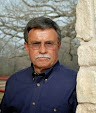
Wednesday, September 24, 2014

Steps That Lead Nowhere


I stood on the steps to the old First Baptist Church in Klondike for a few minutes before the celebration of a friend’s life began. The steps were the only thing left of the old country church. I tried to remember if I had attended a funeral there since my daddy’s was held forty three years ago. I couldn’t remember setting foot in the church since that day. I looked east through the trees and tried to recall details of the Methodist Church that used to be there.

My childhood memories of the church were bittersweet.  I could see the inside of the church in my mind, the pews and pulpit, the picture of Jesus with bleeding hands, and I think there were stained glass windows. I remember being uncomfortable, as if I didn’t fit in, but always felt better after attending on Sunday. 

As more cars arrived, I felt a little conspicuous standing on steps that led nowhere, so I walked over to the new metal building that now served as the church. We were there to honor and celebrate the life of Jerry Biggs, a Klondike resident and a character actor with a long resume. 

I thought of the irony of attending a memorial service in tiny Klondike, the closest thing to a town where I grew up, for an actor who had starred in major films. If someone had told me that as a kid, I would have laughed. 

The new metal building is nice, but it just doesn’t have the ambience of the old wooden church. I perused the gallery of photos of Jerry posing with famous Hollywood actors and regretted not sitting down with him more often when I had the chance to hear more stories about his interesting life.

True, in a small town and county where you are considered new until you have lived here for at least three decades, Biggs was still considered new. Even though he had lived here a very long time, he was not a native. He lived less than a mile from where I grew up and almost directly across from West Delta, the school I attended for eight years.

And he lived in a house I used as inspiration for one of the pivotal scenes in Rivers Flow, my first novel. As I listened to his life story told by friends and family, I was struck by the things I did not know about the man I called a friend.

Jerry and I had almost nothing in common, except a strong affinity for Lonesome Dove, the excellent made-for-tv movie where Jerry starred as reprobate Roy Suggs.  He also had roles in many other notable films such as Silverado, Tender Mercies and Bernie, to name a few. 
 
I loaned him my horse Rowdy to make a documentary film for the local university. Jerry had to ride down a hill into a small valley in the opening scene. By his own admission, Jerry was a much better actor than rider. When I cautioned him not to squeeze his legs and to push forward on the stirrups, lean back slightly, and pick up the reins if Rowdy quickened his pace. 

I held my breath when Rowdy started to trot down the hill, then lope, then all out run as Jerry couldn’t keep from squeezing. I feared calamity, but Jerry managed to stay aboard and in one piece. He stepped down and began his speaking role in the film unperturbed, like the pro he was.

Some sixteen years ago, Jerry showed up at the site of a barn and arena we were building in my back pasture. He wore his tool belt and volunteered for work that day. Jerald and I were grateful, but looking back, I wonder if we had made him welcome enough and showed our gratitude properly. He brought us copies of his famous photo in character and costume as Roy Suggs. 

As the service came to a close, I resolved to benefit from Jerry’s life. He had reached out to become friends. I did not reject him, of course, but I did not enthusiastically seek a closer friendship. I don’t know why, exactly. I think it was because it was a very busy time in my life, but that may be an excuse. Maybe it was because of our different lifestyles and backgrounds, but I am usually fascinated by people different than myself. Most of my best friends are different personality types than I am. 

Whatever the reason, I knew I had missed an excellent opportunity to know a unique, talented, and fascinating character better. I will try not to let that happen again.

After the services, I stopped again on the old church steps and reminisced, recalling this scene from my second novel. Molly Beth squealed as the Mustang shot away from the Chevy. The little motorcycle was a drag racer’s dream, and Gray had it tuned to fly. He charged down Klondike’s main street, the Chevy following closely behind, unable to pass or gain. Just past Dad Flanagan’s, Gray turned off his light, cut across the Methodist Church parking lot through a field he had played in as a boy, then back through the Baptist Church parking lot. He passed between trees too narrow for a car to follow. The Chevy’s lights were not in sight. 

And this scene from Go Down Looking . . . At the church in Klondike, a preacher nobody in the family knew droned on endlessly in a combination fire-and-brimstone and invitation-to-be-saved sermon. Mattie shook with sobs, ready to shatter like porcelain glass. Jake was on the verge of standing and telling the preacher to stop when he mercifully ended. An octogenarian male quartet sang “The Old Rugged Cross” out of sync with the nonagenarian piano player. Jake ached with grief and shame as the family left the church and watched the pallbearers load his father into the black hearse again. 

Memories. The steps reminded me that many, if not most, of my old childhood haunts are gone now. Looking over the graves of my ancestors down Klondike’s main street at the old post office that my daddy built and Dad Moore’s store reminded me that other landmarks (and people) suffer the ravages of time and are not long for this world. Makes me pleased I captured at least some of them on the printed page.

Tuesday, September 9, 2014

An Instruction Manual for Grandparents

I’ve often wondered why there are not more books about the relationships between grandparents and grandchildren. There are plenty of books about parenting, but not so many about grandparenting. Guess folks don’t think it’s as important and they’re probably right.

I recall having separation anxiety when my children entered their teens. Back in those days, we lived in town and I saved up to buy a small place in the country to keep our horses and a few cows. When my son and daughter were little, they begged to go with me to the country. In fact, I could hardly sneak off anywhere without one or both in the seat beside me. 

Then, suddenly it seemed, they didn’t want to go anymore. That was about the time when they stopped hanging on my every word and started ignoring me. They never stopped watching me, just stopped listening. 

I used to say half-seriously that the little girl who used to sit on my knee and bring me iced tea after work went into her room one day and never came out. The son who begged me to play catch or to drive a tractor suddenly seemed more interested in girls and cars.

For the last few years, I have experienced almost the same thing with grandchildren. Lovely, lively babies who laughed at all my antics, loved hugs and kisses, and were easily entertained with the simplest things like a wiener roast or a simple campfire, became easily bored and hard to entertain. With the arrival of smart phones and I-pads, it got worse. 

Then, they started to slur their words and fail to articulate what they are trying to say. In other words, they mumbled a lot and talked too fast (and it’s not because of hearing loss). I couldn’t get them to take their eyes off their phones and gadgets long enough to find out anything about their lives. I sort of gave up. 

Jan chastised me. Said she was enjoying their teen years. She loves making pillows and quilts for them and teaching them her craft. I couldn’t relate, especially with the girls. I did not want those sweet little girls to turn into young women. Of course, it was a train that should not be stopped.

Before they got as big as us, we used to keep all seven overnight for a night or two. Those visits were filled with laughter and joy. Tiring, yes, but memorable. But the teen years brought a few arguments (with us and with each other) and they became a little harder work. The bigger kids seemed to take up the whole house plus some. I felt them slipping away.

But this past year has been a good one. Just when you think they have outgrown you for good, one calls to say she wants to drop by and bring her boyfriend before she returns to college in the fall. She doesn’t need our approval, but we are happy she sought it.

Then another called just back from being a camp counselor and wanted to renew old memories by riding my horse. Gave us a warm feeling. She also wrote us a letter at Christmas recounting her fond memories of the fun things we used to do at our place. Good to know she remembers.

Then another one called the other day to ask advice before a job interview. I don’t know if I helped her, but it warmed my heart that she asked. 

Getting news that a grandson had begun to heal a rift with his father was also heartwarming. I like to think he was inspired by the great relationship between his father and me.

We still have two in high school and one in middle school. The soon-to-be senior came over the other day and welded some fence for me and washed Jan’s car. The soon-to-be freshman made her first real quilt this year and had some adventures in cooking with GranJan. Our twelve-year-old boy had to have surgery that messed up his summer. But his courage and good humor inspired us all. 

Maybe we don’t need an instruction manual or book after all. As my old friend and farrier-philosopher Max Moody said about his grandchildren, “You just gotta pick ‘em up and hug ‘em once in a while.” 


Tuesday, August 26, 2014

The Toughest Challenge of All


If an unknown writer is able to get his book published by any means possible, he is still left with the toughest job of all—selling his book. Not complaining, just conundrums I have noticed.
    
In virtually all the stories and books about marketing I have read, all the seminars I have attended, all the people I have asked, this same advice is repeated:

Write a good book. Who knew? Well, let me just throw out this terrible manuscript and             write a good one. Why didn’t you say so first? But doesn’t every author think his             manuscript is good? Otherwise, why would he write it?

Do a lot of social media. Know how many sites there are to promote books in cyberspace  in addition to FB, Twitter, Goodreads, etc? Neither do it, but there are many. How do we select or do we try to use all? Reminds me of the days when clients wanted me to pick stocks. Which industry or segment, big or small, foreign or domestic, etc?

The most important question about internet and social media marketing—does it work? Answer: A small fraction of the time. And I don’t accept a few lucky break-outs, flukes, momentary jumps in sales or sales by authors who are already well-known as evidence. I want empirical evidence. Yes, there are many authors who put in hundreds of hours and make it work, and a few that put in a fraction of that and go “viral”, but is that time a good investment when one considers the odds?

Before social media, 95% of the money in writing was made by 5% of the authors. After social media, it remains about the same. And working social media takes a tremendous amount of time—time I would rather use writing. And yes, I have colleagues who seem able to do both. I don’t seem to be able to.

Build a platform. I built a platform in the business world by being lucky enough to be in the right place at the right time at the birth of a new age in the financial services industry.That led to four books and many presentations and seminars. Luck happens when preparation meets opportunity. I try to apply those same principles to building my platform as a novelist. But how does one build a platform as a novelist? The answer seems to be—sell a lot of novels. The cart before the horse.  

Get a good agent. When I meet an agent, I ask how they signed their best-selling authors. Invariably, they tell about authors who broke all the standard advice for soliciting agents. So why do they keep giving advice they seldom follow? 

When I ask successful authors how they found their agents, in almost every case, they found them by a fluke or more often, through a recommendation from a better-known author.  

One prominent sage gave this advice to writers of fiction in a blog post:

“Find a way to make your novel relevant by writing about issues readers care about or current hot topics.” My questions for her:
What are the issues readers care about in fiction? Today, they seem to be vampires, zombies, and Mommy Porn.
It usually takes two years to complete a book and publish it. How do writers know what will be the hot topics in two years?
What is an example of relevant fiction? 

She didn’t answer.

Why write when faced with such conundrums? I write so that I can make the best use of the time I have left and possibly add value to my readers’ lives.

And I will never give up reading articles and books or listening to good speakers who try to reveal the answers. But I am pretty much resigned to the fact that nobody has come up with a good plan for selling fiction—yet . 

Some of you may be wondering if I’m stuck on stupid. Why not write “relevant” fiction that has blockbuster potential? Yes, I have asked myself that question. The answer is I only enjoy writing the type of book I like to read and I write for my small reader base.  I write because I enjoy it and I wouldn’t enjoy writing about vampires.

I used to say that I write about how ordinary people react to extraordinary events. But I have learned that’s not quite accurate. I mostly write more about how ordinary people react to ordinary problems and events. I may be naïve, but I think a lot of readers will be both entertained and informed by how my characters handle situations they may have experienced themselves. Because I write based on real events, solutions are real, too. 

I may hit on that fluke yet, the elusive spark that ignites a fire. But I’m not gonna rely on it. I’ll keep writing for the folks who read my stuff.  I am grateful for you. 

Wait. I think the solution just came to me. Find a celebrity, a movie star, a TV host, even a famous author who will put his name in big letters as the co-author of a book I have written. My name would be in tiny letters under his. People do that a lot. If only I knew such a person.